


-
September 7, 2026
-
BySteffy A
GST Registration using Aadhaar: Process and Verification
Introduction
GST Registration using Aadhaar has become an important part of the GST registration process in India. Aadhaar authentication enables applicants to verify their identity electronically through the GST portal and helps tax authorities process registration applications more efficiently.
For businesses applying for GST registration, using Aadhaar offers a convenient method of identity verification through OTP-based authentication. However, Aadhaar authentication does not automatically guarantee registration approval, as applications remain subject to verification and examination by the concerned tax authorities.
This article explains the process, benefits, eligibility, documents required, and important considerations relating to Registration of GST using Aadhaar.
What is meant by GST Registration using Aadhaar?
GST Registration using Aadhaar refers to the process of verifying the identity of an applicant through Aadhaar authentication while applying for GST registration. During the registration process, eligible applicants may be provided with the option to authenticate their identity electronically using Aadhaar-based OTP verification.
The objective of registration of GST using Aadhaar is to simplify identity verification and reduce reliance on manual verification procedures. The authentication process helps tax authorities validate the identity of applicants and strengthen the overall GST registration framework.
However, successful Aadhaar authentication does not automatically result in approval of GST registration. The application remains subject to review and verification by the concerned GST authorities.
Is Aadhaar Authentication Required for GST Registration?
Aadhaar authentication serves as an important mechanism for identity verification during the GST registration process. Applicants who complete Aadhaar authentication may experience a smoother verification process and faster identity validation.
However, GST registration is not denied solely because Aadhaar authentication is not completed. Depending on the circumstances of the application, the GST department may require additional verification measures, including the submission of supporting documents or physical verification of the business premises.
Therefore, registration of GST using Aadhaar is an important verification option, while alternative verification procedures may also be available in accordance with applicable GST laws and regulations.
What are the Benefits of GST Registration using Aadhaar?
1. Convenient Identity Verification
The Aadhaar authentication process allows applicants to verify their identity electronically through OTP-based authentication, reducing the need for extensive manual verification.
2. Reduced Documentation Burden
GST Registration using Aadhaar can simplify identity verification requirements and reduce the need for additional supporting documents for identity confirmation.
3. Enhanced Transparency
Electronic authentication improves transparency in the verification process and helps establish the authenticity of applicant information.
4. Improved Compliance Environment
Aadhaar-based verification supports efforts to strengthen the GST registration system and minimize the possibility of fraudulent registrations.
5. Better User Experience
Applicants can complete a significant part of the verification process online, making GST Registration using Aadhaar more convenient and accessible.
Who Can Opt for GST Registration using Aadhaar?
The option of GST Registration using Aadhaar is generally available to individuals associated with the business registration application, including:
- Proprietors of proprietorship firms
- Partners of partnership firms
- Designated partners of Limited Liability Partnerships (LLPs)
- Directors of companies
- Authorized signatories
- Promoters of business entities
The requirement for Aadhaar authentication may vary depending on the constitution of the business and the information furnished in the GST registration application.
Documents Required for GST Registration using Aadhaar
|
Document |
Purpose |
|
PAN Card |
Tax identification and verification |
|
Aadhaar Card |
Aadhaar authentication and identity verification |
|
Business Address Proof |
Verification of principal place of business |
|
Bank Account Details |
Banking verification |
|
Passport-size Photograph |
Applicant identification |
|
Authorization Letter or Board Resolution |
Authorization for representatives, where applicable |
Applicants should ensure that all documents are accurate, valid, and updated before initiating the registration process.
Step-by-Step Process for GST Registration using Aadhaar
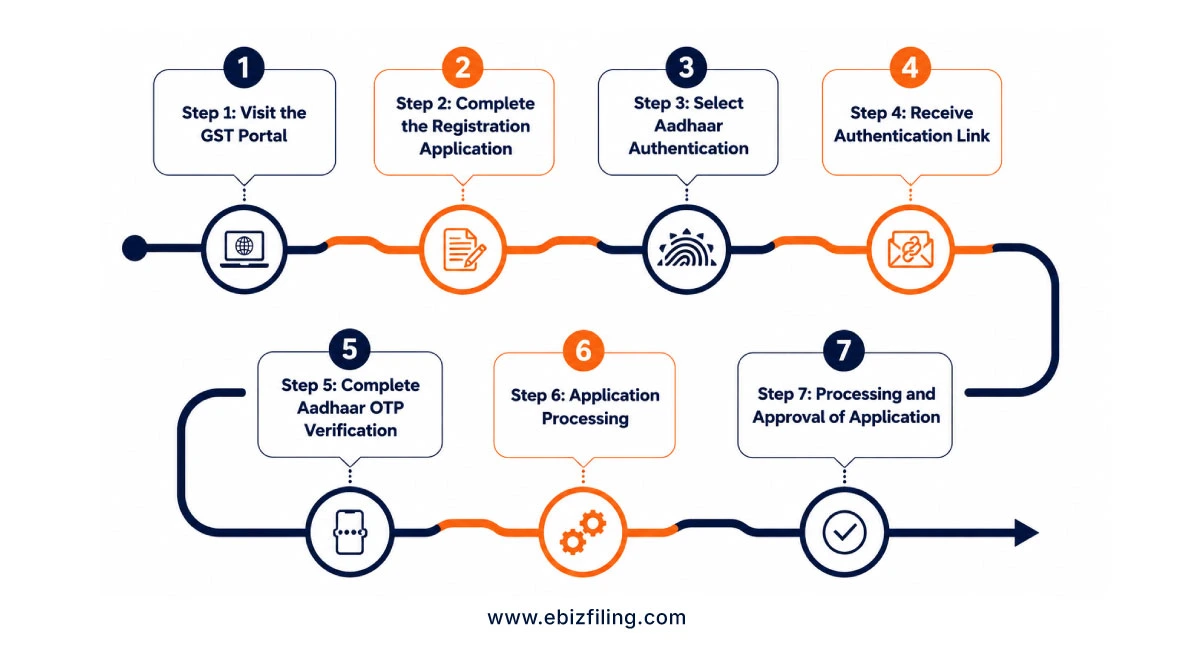
Step 1: Visit the GST Portal
Access the GST login portal and select the option to apply for a new GST registration.
Step 2: Complete the Registration Application
Enter all required business details, including PAN information, business address, contact details, and information relating to promoters, partners, directors, or authorized signatories.
Step 3: Select Aadhaar Authentication
During GST Registration using Aadhaar, eligible applicants may be provided with the option to complete Aadhaar authentication.
Step 4: Receive Authentication Link
After submission of the application, an authentication link may be sent to the registered email address and mobile number.
Step 5: Complete Aadhaar OTP Verification
The applicant is required to enter the Aadhaar number and complete OTP-based authentication using the mobile number linked with Aadhaar. This is one of the most important stages of GST Registration using Aadhaar, as it enables electronic verification of identity.
Step 6: Application Processing
After successful authentication, the GST registration application is forwarded for processing and review by the GST authorities.
Step 7: Processing and Approval of Application
After the completion of GST Registration using Aadhaar, the application is reviewed by the concerned tax authorities. The authorities may examine the information and supporting documents submitted by the applicant and may seek additional clarification where required.
If the application satisfies the prescribed requirements under GST law, GST registration is approved and a GSTIN is allotted to the applicant.
What Happens After GST Registration using Aadhaar?
After successful GST Registration using Aadhaar authentication:
- The GST application is forwarded for departmental review.
- The tax authorities examine the application and supporting documents.
- Additional information or clarification may be requested, if required.
- In certain cases, the application may be selected for further verification, including physical verification of the business premises.
- Upon satisfactory verification and approval, GST registration is granted and a GSTIN is issued.
Applicants should regularly track the status of their application on the GST portal and promptly respond to any notices or clarification requests.
Reasons for Aadhaar Authentication Failure
While GST Registration using Aadhaar is generally straightforward, applicants may face authentication issues due to the following reasons:
Aadhaar-Mobile Number Not Linked: OTP-based authentication requires an active mobile number linked with Aadhaar.
Incorrect Aadhaar Details: Errors in Aadhaar information, such as name or date of birth mismatches, may result in authentication failure.
OTP Validation Issues: Incorrect OTP entry, network issues, or OTP expiry may interrupt the authentication process.
Information Mismatch: Differences between the details furnished in the GST application and Aadhaar records may require additional verification.
Technical Errors: Temporary technical issues on the GST portal or authentication systems may affect the Aadhaar verification process.
GST Registration without Aadhaar Authentication
Applicants who are unable to complete GST Registration using Aadhaar may still apply for GST registration through alternative verification procedures prescribed under GST regulations.
The verification procedure applicable to an applicant may be determined by the GST authorities based on applicable laws, rules, notifications, and risk parameters in force at the time of application.
In such situations, the GST department may:
- Request additional supporting documents.
- Seek clarification regarding the information furnished in the application.
- Conduct verification of business records.
- Carry out physical verification of the principal place of business where considered necessary.
The grant of GST registration depends upon the verification of the information provided and the satisfaction of the proper officer regarding the genuineness of the application.
GST Registration using Aadhaar vs Physical Verification
|
Parameter |
GST Registration using Aadhaar |
Physical Verification |
|
Verification Method |
OTP-based electronic verification | Verification by GST authorities |
| Process | Online authentication |
May involve site inspection |
|
Identity Validation |
Aadhaar-based | Document and premises verification |
| Documentation | Standard registration documents |
Additional documents may be requested |
|
Convenience |
Generally more convenient |
Additional verification steps may be involved |
What to Remember Before GST Registration using Aadhaar?
Before opting for GST Registration using Aadhaar, applicants should keep the following points in mind:
- Ensure that the mobile number linked with Aadhaar is active.
- Verify that Aadhaar and PAN application details are accurate and updated.
- Keep all supporting business documents readily available.
- Provide correct business address and contact information.
- Review the GST application carefully before submission.
- Respond promptly to any clarification requests raised by GST authorities.
Following these steps can help reduce delays during GST Registration using Aadhaar.
How Ebizfiling Can Helps with GST Registration using Aadhaar?
Avoid delays and registration stress with Ebizfiling’s expert GST registration services. We provide end-to-end support for GST Registration using Aadhaar, including document verification, application filing, Aadhaar authentication assistance, and ongoing compliance guidance.
Our dedicated team works closely with you to ensure a seamless registration experience, allowing you to focus on growing your business while we handle the compliance process.
Start your GST Registration with Ebizfiling and stay compliant from day one.
Conclusion
GST Registration using Aadhaar provides businesses with a convenient and secure method of identity verification during the GST registration process. Through electronic authentication, applicants can complete an important verification requirement digitally and efficiently.
While registering GST using Aadhaar can help streamline the verification process, registration approval remains subject to examination by the GST authorities. Businesses should ensure that all information, documents, and Aadhaar details are accurate to avoid delays and facilitate a smooth registration experience.
FAQs
1. Who is required to undergo Aadhaar authentication during GST registration?
Aadhaar authentication may be required for the proprietor, managing partner, karta, director, authorized signatory, or other specified individuals associated with the registering GST application, depending on the constitution of the business.
2. Can a GST registration application be processed if Aadhaar authentication is not completed?
Yes. If Aadhaar authentication is not completed, the applicant may be subject to additional verification procedures, including document verification or physical verification of the principal place of business, as prescribed under GST regulations.
3. What happens if the details entered in the GST application do not match the Aadhaar records?
A mismatch between the details provided in the GST application and Aadhaar records may result in authentication failure or additional verification by the GST authorities before processing the application.
4. Is the Aadhaar authentication process linked with PAN verification during GST registration?
Yes. PAN verification and Aadhaar authentication are separate validation mechanisms used during GST registration to verify the identity and tax credentials of the applicant.
5. Can GST authorities conduct physical verification even after successful Aadhaar authentication?
Yes. GST authorities may conduct physical verification of the business premises in cases selected for additional scrutiny or verification based on applicable rules and risk parameters.
6. Does Aadhaar authentication guarantee approval of GST registration?
No. Successful Aadhaar authentication only verifies the identity of the applicant. The GST registration application remains subject to examination, verification, and approval by the proper officer.
7. What should an applicant do if the mobile number linked to Aadhaar is inactive?
The applicant should update or reactivate the mobile number linked with Aadhaar before initiating the authentication process, as OTP-based verification requires access to the registered mobile number.
8. How can Ebizfiling assist with GST Registration using Aadhaar?
Ebizfiling provides end-to-end support for GST registration, including document review, application filing, Aadhaar authentication guidance, and assistance in responding to departmental queries, if any.
9. Can Ebizfiling help if a GST registration application is marked for additional verification?
Yes. Ebizfiling assists applicants in preparing and submitting supporting documents, addressing clarification notices, and complying with verification requirements raised by GST authorities.
10. Does Ebizfiling provide support for GST registration of companies, LLPs, and partnership firms using Aadhaar authentication?
Yes. Ebizfiling supports GST registration for various business entities, including proprietorships, partnership firms, LLPs, private limited companies, and other eligible entities, subject to applicable GST requirements.





GST Registration Online in India
Get your GST registration done quickly and hassle-free with expert assistance.
About Ebizfiling -



October 7, 2026 By Srishti M
September 28, 2026 By Srishti M
GST Section 74 Notice: Key Supreme Court Guidelines for Valid SCNs Overview A GST Section 74 notice is a serious GST communication because it may involve allegations of fraud, wilful misstatement or suppression of facts to evade tax. For tax […]
September 29, 2026 By Srishti M
GST Compliance Calendar October 2026: Key Due Dates & Filings Introduction The GST Compliance Calendar for October 2026 provides a detailed overview of important GST return filing deadlines, payment requirements and taxpayer-specific compliance obligations. October 2026 includes key GST due […]