

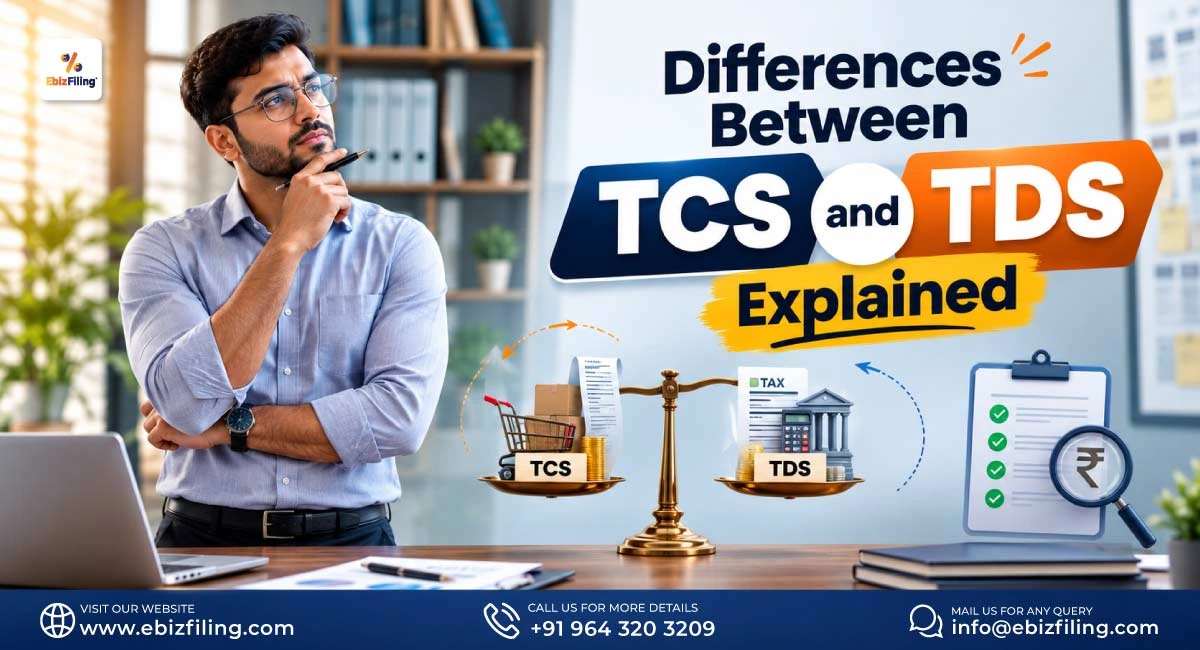
-
August 10, 2026
-
BySteffy A
Difference Between TCS and TDS Under the Income Tax Act, 2025
Introduction
Understanding the differences between TCS and TDS is essential for businesses, professionals, taxpayers, and finance teams responsible for tax compliance. Both Tax Deducted at Source (TDS) and Tax Collected at Source (TCS) are mechanisms introduced to ensure timely collection of taxes and improve tax compliance. However, despite serving a similar purpose, their applicability, compliance requirements, and operational impact differ significantly.
An important development for taxpayers is that the Income-tax Act, 1961 has been replaced by the Income-tax Act, 2025 with effect from 1 April 2026. Under the new law, TDS provisions are primarily governed by Section 392 (salary payments) and Section 393 (specified payments other than salary), whereas TCS provisions are covered under Section 394. Therefore, businesses must understand the differences between TCS and TDS to ensure compliance under the revised legal framework.
What is TDS Under the Income-tax Act, 2025?
Before understanding the differences between TCS and TDS, it is important to understand TDS separately.
Tax Deducted at Source (TDS) is a mechanism where a person making specified payments deducts tax before releasing the payment to the recipient. The deducted amount is then deposited with the government on behalf of the recipient.
Under the Income-tax Act, 2025:
Section 392 deals with TDS on salary.
Section 393 governs TDS on specified non-salary payments.
TDS is generally applicable to transactions such as:
- Salary payments
- Rent payments
- Professional and technical fees
- Interest payments
- Commission and brokerage
- Contractor payments
- Certain property-related transactions
For example, if a company pays ₹1,00,000 as professional fees to a consultant, it may deduct tax at the prescribed rate before making payment. The consultant receives the balance amount and can claim credit for the tax deducted while filing the Income Tax Return (ITR).
What is TCS Under the Income-tax Act, 2025?
To fully understand the differences between TCS and TDS, it is equally important to understand TCS.
Tax Collected at Source (TCS) is a mechanism under which the person specified for a covered receipt collects tax from the buyer, remitter, licensee, or lessee.
Depending on the transaction, the person responsible for collecting TCS may be a seller, an authorised dealer, a licensor, or a lessor. Under Section 394, TCS is generally collected at the earlier of debiting the amount payable or receiving the amount through cash, cheque, draft, or any other mode.
Under the Income-tax Act, 2025, TCS provisions are covered under Section 394.
TCS commonly applies to:
- Sale of motor vehicles above the prescribed threshold
- Overseas tour program packages
- Foreign remittances under the Liberalised Remittance Scheme (LRS)
- Other specified transactions notified by the government
For instance, if a dealer sells a motor vehicle for a consideration exceeding ₹10 lakh, the dealer is generally required to collect TCS at 1% of the sale consideration and deposit it with the government.
Unlike TDS, where tax is deducted from the payment being made, TCS is collected in addition to the transaction value.
Since the Income-tax Act, 2025 has reorganized the TDS and TCS framework, taxpayers should review the latest TDS and TCS changes under the Income-tax Act, 2025 to understand the updated compliance requirements and transition provisions.
Differences Between TCS and TDS Under the Income-tax Act, 2025
The differences between TCS and TDS can be better understood through the following comparison:
|
Basis of Comparison |
TDS (Tax Deducted at Source) |
TCS (Tax Collected at Source) |
|
Meaning |
Tax deducted before making specified payments | Tax collected on specified sales and receipts |
| Governing Sections | Section 392 and Section 393 |
Section 394 |
|
Responsible Person |
Deductor/Payer | Collector/Seller |
| Tax Collected From | Recipient of income |
Buyer or customer |
|
Trigger Event |
Payment or credit of specified income | Receipt of consideration |
| Nature of Transaction | Payment-based |
Receipt-based |
|
Common Transactions |
Salary, rent, professional fees, interest, commission | Vehicle sales, foreign remittances, overseas tour packages |
| Impact on Cash Flow | Reduces amount received by recipient |
Increases amount payable by buyer |
|
Tax Credit Available To |
Recipient | Buyer |
| Compliance Obligation | Deduction, deposit, return filing, certificate issuance |
Collection, deposit, return filing, certificate issuance |
The above table clearly highlights the primary differences between TCS and TDS and why businesses must identify the correct provision before processing a transaction.
Differences Between TCS and TDS Based on Applicability
One of the most important differences between TCS and TDS is their applicability.
TDS generally applies when a person is making a specified payment. The obligation to deduct tax arises because the payment represents income in the hands of the recipient.
For example:
- A company paying professional fees to a consultant.
- A business paying office rent to a landlord.
- An employer paying salary to employees.
- In all these cases, TDS provisions become relevant.
TCS, on the other hand, applies to receipts specifically covered under Section 394. The person responsible for collection depends on the nature of the transaction. A seller may collect TCS on specified sales, an authorised dealer collects it on covered LRS remittances, and a licensor or lessor may collect it on specified business-use receipts. The collection point is determined according to the applicable provision.
For example:
- Sale of a motor vehicle above the prescribed limit.
- Collection of amounts for overseas tour packages.
- Certain foreign remittance transactions.
Therefore, one of the key differences between TCS and TDS is that TDS is linked to payments, whereas TCS is linked to specified receipts and is collected by the person identified for the relevant transaction under Section 394.
Differences Between TCS and TDS Based on Compliance Responsibility
Another important aspect of the differences between TCS and TDS is identifying who is responsible for compliance.
Under TDS provisions, the payer becomes the deductor. The deductor must:
- Deduct tax at the prescribed rate.
- Deposit the tax with the government.
- File TDS returns.
- Issue TDS certificates.
- Maintain proper records.
Under TCS provisions, the person specified for the relevant receipt becomes the collector. Depending on the transaction, the collector may be a seller, an authorised dealer, a licensor, or a lessor. The collector must:
- Collect tax from the buyer.
- Deposit the collected tax.
- File TCS returns.
- Issue TCS certificates.
- Maintain records of collection and payment.
Although both mechanisms require tax reporting and return filing, the responsible person differs significantly. This is one of the practical differences between TCS and TDS that businesses must understand.
Differences Between TCS and TDS Based on Cash Flow Impact
Businesses often ignore the financial impact arising from the differences between TCS and TDS.
Consider a consultant raising an invoice of ₹1,00,000.
If TDS applies at 10%, the consultant receives only ₹90,000, while ₹10,000 is deposited with the government as tax deducted at source.
Now consider a vehicle sale of ₹15 lakh.
If TCS is applicable, the buyer pays the vehicle price plus the applicable TCS amount. The seller receives the total amount and deposits the tax collected with the government.
Thus:
- TDS reduces the immediate amount received by the recipient.
- TCS increases the amount paid by the buyer.
This distinction is one of the most practical differences between TCS and TDS from a business perspective.
How Tax Credit Works Under TDS and TCS
While there are several differences between TCS and TDS, both mechanisms ultimately provide tax credit to the taxpayer.
When TDS is deducted:
- The tax is reflected in the recipient’s tax records.
- The recipient can claim credit while filing the Income Tax Return.
- Excess tax can be claimed as a refund.
Similarly, when TCS is collected:
- The buyer receives tax credit.
- The collected amount can be adjusted against total tax liability.
- Excess credit can be claimed as a refund.
For example:
If a taxpayer has:
- TDS Credit: ₹40,000
- TCS Credit: ₹15,000
- Total Tax Liability: ₹50,000
The taxpayer can adjust both credits and may become eligible for a refund if the total credit exceeds the final tax liability.
Businesses should also familiarize themselves with the new TDS and TCS forms under the Income-tax Act, 2025 to ensure accurate reporting and compliance under the revised tax framework.
Mistakes Businesses Make While Applying TDS and TCS
A lack of understanding of the differences between TCS and TDS often leads to compliance errors.
Some common mistakes include:
- Applying TCS Instead of TDS: Businesses sometimes collect TCS on transactions where TDS provisions are applicable.
- Incorrect Section References: After 1 April 2026, businesses should refer to the relevant provisions under Sections 392, 393, and 394 instead of relying solely on the old section references of the Income-tax Act, 1961.
- Delayed Tax Deposit: Failure to deposit TDS or TCS within the prescribed timeline may attract interest and penalties.
- Incorrect Return Filing: Errors in return filing may result in notices and tax credit mismatches.
- Failure to Issue Certificates: Failure to issue TDS or TCS certificates may create difficulties for taxpayers while claiming tax credits.
Why Understanding the Differences Between TCS and TDS Is Important?
Businesses deal with hundreds of transactions every month. A clear understanding of the differences between TCS and TDS helps organizations:
- Avoid compliance errors.
- Ensure timely tax deposits.
- Reduce the risk of notices and penalties.
- Improve tax credit reconciliation.
- Maintain accurate accounting records.
- Manage cash flow effectively.
Since the Income-tax Act, 2025 is now the governing legislation from 1 April 2026, businesses should review their compliance procedures and ensure alignment with the new framework.
Simplify TDS and TCS Compliance with Ebizfiling
Understanding the differences between TCS and TDS is only the first step. Businesses must also ensure timely compliance with deduction, collection, return filing, and reporting requirements.
Ebizfiling provides expert assistance for TDS return filing, TCS return filing, tax reconciliation, compliance reviews, and notice management. Our team helps businesses comply with the latest provisions of the Income tax Act, 2025 and avoid costly compliance errors.
Connect with Ebizfiling for stress-free compliance.
Conclusion
The differences between TCS and TDS primarily lie in the nature of the transaction, the person responsible for compliance, and the stage at which tax is collected. Under the Income-tax Act, 2025, TDS is governed by Sections 392 and 393, while TCS is governed by Section 394. While TDS generally applies to specified payments such as salary, rent, professional fees, and interest, TCS applies to specified sales and receipts such as motor vehicle sales and foreign remittances.
Understanding the differences between TCS and TDS helps businesses ensure accurate compliance, avoid penalties, and maintain efficient tax management under the new tax regime.
Suggested Reads:
Professional Tax notice: Explained
Income Tax Clearance certificate: Explained
Frequently Asked Questions
1. Which section covers TDS and TCS under the Income-tax Act, 2025?
Under the Income-tax Act, 2025, TDS on salary is covered under Section 392, TDS on specified non-salary payments is covered under Section 393, and TCS is covered under Section 394. These provisions became effective from 1 April 2026.
2. Can TDS and TCS apply to the same transaction?
The applicability of TDS and TCS must be examined according to the relevant statutory entries, thresholds, and exclusions. They should not be treated as automatically applicable together. For LRS remittances and overseas tour programme packages, Section 394 specifically provides that TCS is not required where the buyer is liable to deduct TDS under another provision and has actually deducted such tax. For other transactions, the applicable TDS and TCS provisions should be reviewed separately.
3. Which is more common for businesses: TDS or TCS?
TDS is more common for most businesses because it applies to routine payments such as salary, rent, professional fees, contractor payments, and interest. TCS generally applies only to specified transactions covered under Section 394.
4. Does TDS apply to rent payments under the Income-tax Act, 2025?
Yes. Rent payments are covered under the relevant entries of Section 393 of the Income-tax Act, 2025, subject to the prescribed threshold limits and conditions.
5. Is TCS applicable on the sale of motor vehicles above ₹10 lakh?
Yes. Where the sale consideration of a motor vehicle exceeds ₹10 lakh, the seller is generally required to collect TCS at 1% of the sale consideration under Section 394 of the Income-tax Act, 2025.
6. What happens if a business collects TCS instead of deducting TDS?
Incorrect application of TCS instead of TDS may result in interest liability, penalties, return corrections, and notices from the Income Tax Department. Businesses should determine the correct provision before processing a transaction.
7. How are TDS and TCS credits reflected while filing an Income Tax Return?
Both TDS and TCS credits are reflected in the taxpayer’s tax records and can be claimed while filing the Income Tax Return. Excess credit may be adjusted against tax liability or claimed as a refund.
8. How can Ebizfiling help determine whether TDS or TCS is applicable to a transaction?
EbizFiling helps businesses review transactions, identify the correct tax provision, determine applicable rates and thresholds, and ensure compliance under Sections 392, 393, and 394 of the Income-tax Act, 2025.
9. Can Ebizfiling assist with TDS and TCS return filing and reconciliation?
Yes. Ebizfiling provides end-to-end assistance with TDS and TCS return filing, correction statements, tax credit reconciliation, compliance reviews, and notice management.
10. What is the biggest difference between TCS and TDS for businesses?
The biggest difference is that TDS is deducted from specified income or payments by the person responsible for making the payment, whereas TCS is collected on specified receipts by the person identified under Section 394. The TCS collector may be a seller, authorised dealer, licensor, or lessor, depending on the transaction. TDS generally reduces the amount received by the payee, while TCS generally increases the amount payable by the buyer or customer.





TDS Returns Filing
Quickly file error-free TDS Returns with EbizFiling. This ensures seamless credit to the deductee.
About Ebizfiling -



Reviews
Aman Singh
08 Sep 2018Easy,fast and reliable service. Would love to highly recommend. Thanks a lot Ishani.
Devang Panchal
09 Sep 2018They helped me with my company’s name change and I was quite satisfied with the way they served me. I am surely coming back to you in case of any compliance problem.
Jayesh Tejani
28 Aug 2017It is a very professional set up and a really dedicated team. You guys did a great job for my Trademark application in a really short time. All the best to you and your team.
September 28, 2026 By Srishti M
September 29, 2026 By Srishti M
Income Tax Compliance Calendar October 2026: Filing Guide Introduction The Income Tax Compliance Calendar October 2026 highlights important income tax obligations applicable to taxpayers, businesses and entities covered under audit and transfer pricing provisions. October 2026 includes key compliance […]
September 21, 2026 By Siddhi R
Section 130 of the Income Tax Act: Home Loan Interest Deduction Introduction Buying a residential house property often involves taking a home loan, and the interest paid on such loans can provide tax benefits under certain provisions of the Income […]