


-
July 14, 2026
-
BySteffy A
Form 64D Filing for Investment Funds under Section 115UB
Introduction
Form 64D Filing is a mandatory compliance requirement for eligible investment funds under Section 115UB of the Income tax Act, 1961. The form is used to report the income paid or credited by an investment fund to its unit holders during a financial year. Timely filing helps investment funds comply with tax laws, maintain transparency, and ensure accurate reporting to the Income Tax Department. For tax years governed by the Income tax Act, 2025 (effective from 1 April 2026), Form 64D has been renumbered as Form 79, and Section 115UB has been renumbered as Section 224.
In this blog, you will learn about Form 64D Filing, its applicability, due date, eligibility, the filing process, the consequences of non-compliance, and the corresponding provisions under the Income tax Act, 2025.
Form 64D Filing under the Income tax Act, 1961
Form 64D is a yearly statement that investment funds in India must file with the Income Tax Department under Section 115UB of the Income tax Act, 1961. It gives details of the income shared with unit holders during the financial year. This ensures that the Income Tax Department knows how much income was passed on to the unit holders. It must be submitted by the person managing the fund, such as a fund manager or trustee. Filing Form 64D on time helps avoid penalties and keeps the fund in line with tax laws. It helps maintain transparency between the fund, its unit holders, and the Income Tax Department.
Investment funds that are also required to file their income tax return can read Ebizfiling’s guide on ITR Form 7 Filing for better clarity on return filing applicability.
Note: Under the Income tax Act, 2025, Form 64D has been renumbered as Form 79, and Section 115UB under the Income Tax Act has been renumbered as Section 224.
Who Should File Form 64D?
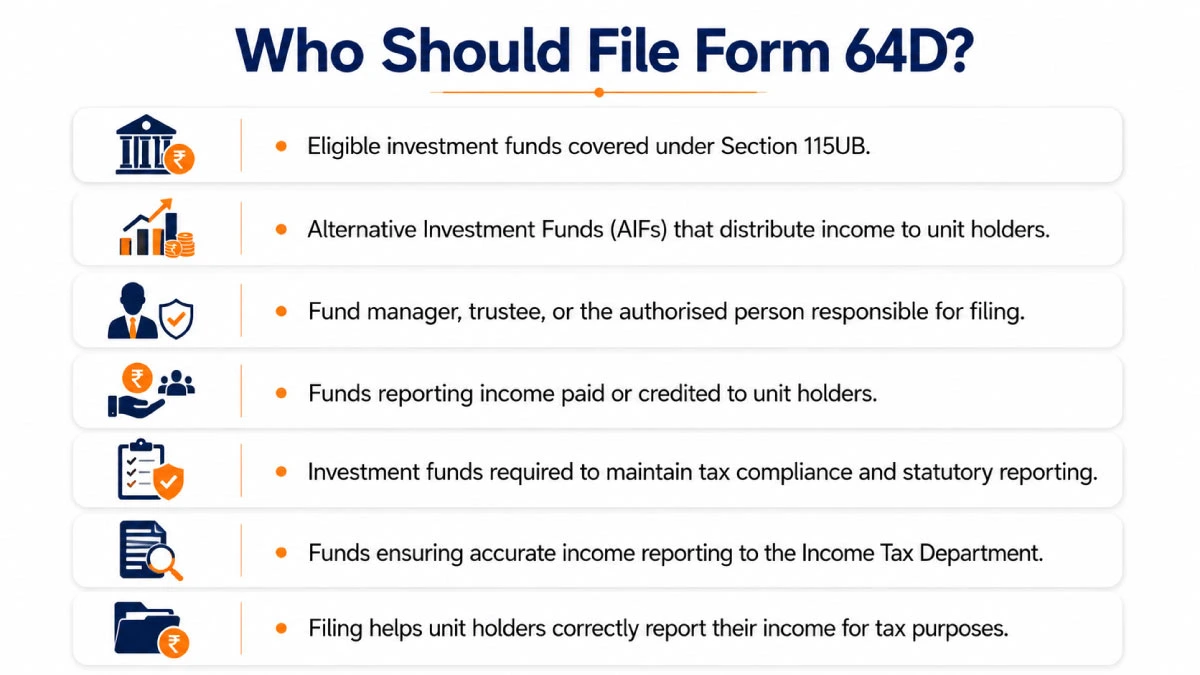
Form 64D must be filed by eligible investment funds covered under Section 115UB, mainly Category I and Category II Alternative Investment Funds registered or regulated under the applicable SEBI or IFSCA framework. The responsibility lies with the fund manager, trustee, or the person responsible for handling the income distribution. They must report the income paid or credited to each unit holder during the financial year. This helps the Income Tax Department maintain records of such payments. Filing this form ensures proper tax compliance. It also helps unit holders accurately report their income for tax purposes.
Due Date for Filing Form 64D
The due date for filing Form 64D is 15th June of the financial year following the previous year in which the income is paid or credited to unit holders. Meeting this deadline is important to stay compliant and avoid penalties or compliance issues. Timely filing also helps ensure smooth tax reporting for both the investment fund and its unit holders.
How to File Form 64D?
1. Prepare the Required Information
Before filing, gather the following details:
- Investment Fund Details: Name, PAN, registered office address, legal status, and previous year ending.
- Management Details: Details of directors, trustees, partners, or other responsible persons managing the investment fund.
- AIF Registration Details: SEBI AIF registration details or IFSC fund registration details, wherever applicable.
- Unit Holder Information: Names, PANs, addresses, and income allocation details of all unit holders.
- Income Details: Amount of income paid, credited, or deemed to be credited to each unit holder.
- Loss Details: Details of losses, if any, as required under Section 115UB.
- Supporting Documents: Audited accounts, annual report, balance sheet, and income appropriation statement.
- Verification Details: Accountant verification and valid Digital Signature Certificate.
Since Form 64D requires audited accounts and financial records, readers may also refer to Ebizfiling’s Tax Audit Applicability guide for related audit compliance understanding.
2. Log in to the Income Tax e-Filing Portal
Access the official Income Tax e-Filing Portal at https://www.incometax.gov.in.
3. Navigate to the ‘e-File’ Section
Log in to the Income Tax e-Filing Portal and select the applicable income tax form for filing Form 64D, as available on the portal.. (For tax years governed by the Income tax Act, 2025, select Form 79, where applicable.)
4. Fill in the Form
Enter the required details, including information about the investment fund, unit holders, income paid or credited, and other details required in the prescribed form.
5. Verify the Form
Form 64D must be duly verified by an accountant as prescribed under Rule 12CB. The investment fund should ensure that all income details, unit holder details, PAN details, and supporting records are accurate before submission.
6. Submit the Form
After verification, submit the form electronically using a Digital Signature Certificate (DSC). Ensure that the form is successfully submitted and keep the acknowledgment for your records.
Consequences of Non-Compliance
Delay or failure in furnishing Form 64D may attract consequences under the applicable provisions of the Income tax Act, depending on the nature and facts of non-compliance.
- Interest on Delayed Tax: Where applicable, interest may be payable if any related tax liability remains unpaid.
- Legal Consequences: Continuous non-compliance with the filing requirements may result in legal action or additional penalties under the Income tax Act.
- Loss of Credibility: Non-compliance can affect the fund’s reputation with investors and regulatory authorities.
- Issues for Unit Holders: Unit holders may face difficulties in accurately reporting their income if the distributed income is not reported correctly.
Ebizfiling’s Expert Guidance on Form 64D Filing
Whether you’re looking to understand the applicability of Form 64D Filing, its due date, filing process, or the changes introduced under the Income tax Act, 2025, our informative resources are designed to provide clear, reliable, and up-to-date insights for better compliance.
Our Experts Provide
- Expert insights on tax and regulatory compliance
- Up-to-date content based on the latest legal provisions
- Easy-to-understand guides for businesses and professionals
- Practical information to support informed compliance decisions
- Regular updates on changes to tax laws and filing requirements
For broader tax filing support, Ebizfiling also assists businesses with Income Tax Returns Filing Online, Business Income Tax Return Filing, and TDS Return Filing Online.
Conclusion
Form 64D Filing is an important compliance requirement for investment funds in India under Section 115UB of the Income tax Act, 1961. It helps ensure that the income paid or credited to unit holders is accurately reported to the Income Tax Department, promoting transparency and regulatory compliance. By filing Form 64D on time and following the prescribed process, investment funds can avoid compliance issues and maintain accurate tax records. For tax years governed by the Income tax Act, 2025, Form 64D has been renumbered as Form 79 under Section 224. Timely compliance supports smooth tax reporting for both investment funds and their unit holders.
Frequently Asked Questions
1. Is Form 64D Filing mandatory for all investment funds?
No. Form 64D Filing is mandatory only for eligible investment funds covered under Section 115UB of the Income tax Act, 1961, including specified Category I and Category II Alternative Investment Funds (AIFs). Funds that are not covered under these provisions are not required to file the form.
2. Can Form 64D Filing be completed without a Digital Signature Certificate (DSC)?
No. Form 64D Filing is required to be furnished electronically through the Income Tax e-Filing Portal using a valid Digital Signature Certificate (DSC) by the authorised person responsible for filing the statement.
3. What information should be kept ready before starting Form 64D Filing?
Before initiating Form 64D Filing, investment funds should keep details such as the fund’s PAN, unit holder information, income paid or credited, audited financial records, and other relevant supporting documents readily available to ensure accurate reporting.
4. What is the difference between Form 64D and Form 79?
Form 64D is prescribed under the Income tax Act, 1961, whereas Form 79 is its corresponding form under the Income tax Act, 2025. Similarly, Section 115UB has been renumbered as Section 224, while the reporting requirement remains substantially the same.
5. Can Form 64D Filing be revised after submission?
If any incorrect or incomplete information is identified after submission, the investment fund should follow the procedure prescribed by the Income Tax Department for correcting or revising the filing, wherever permitted under the applicable rules. It is advisable to verify all details before submission.
6. Is Form 64D applicable only to Alternative Investment Funds (AIFs)?
Form 64D Filing primarily applies to eligible investment funds covered under Section 115UB, including specified Category I and Category II AIFs that qualify for the pass-through taxation framework. Applicability should always be determined based on the relevant legal provisions.
7. Why is timely Form 64D Filing important?
Timely Form 64D helps investment funds comply with statutory reporting requirements, maintain proper records of income distributed to unit holders, and reduce the risk of penalties or other compliance-related issues under the Income tax Act.
8. Does Form 64D Filing replace the income tax return of an investment fund?
No. Form 64D Filing is an information statement that reports the income paid or credited to unit holders. It does not replace any income tax return or other statutory filing requirements applicable to the investment fund.
9. Where can investment funds check Form 64D requirements?
Investment funds can check the Income Tax e-Filing Portal, Income Tax Rules, CBDT notifications, and the prescribed Form 64D format for official requirements. They can also refer to Ebizfiling for expert guidance on applicability, reporting details, and filing compliance.
10. How does Ebizfiling help readers understand Form 64D Filing?
Ebizfiling provides easy-to-understand articles, compliance updates, and practical tax guidance to help businesses, professionals, and investment funds understand Form 64D Filing, due dates, filing requirements, and changes introduced under the Income tax Act, 2025, enabling readers to stay informed about evolving compliance obligations.





Income Tax Return Filing
File your ITR in simple steps with Ebizfiling
About Ebizfiling -



October 14, 2026 By Srishti M
September 29, 2026 By Srishti M
Income Tax Compliance Calendar October 2026: Filing Guide Introduction The Income Tax Compliance Calendar October 2026 highlights important income tax obligations applicable to taxpayers, businesses and entities covered under audit and transfer pricing provisions. October 2026 includes key compliance […]
September 21, 2026 By Siddhi R
Section 130 of the Income Tax Act: Home Loan Interest Deduction Introduction Buying a residential house property often involves taking a home loan, and the interest paid on such loans can provide tax benefits under certain provisions of the Income […]