

-
July 9, 2026
-
BySteffy A
AML obligations for Practicing CS under FIU-IND Framework
Introduction
AML obligations for Practicing CS are becoming increasingly important in today’s evolving regulatory environment, where the role of Practicing Company Secretaries has expanded beyond traditional compliance functions into areas involving corporate governance, structuring, and due diligence. This makes AML obligations for PCS increasingly relevant, especially when professionals deal with incorporation, ownership structuring, or advisory assignments involving financial or regulatory exposure.
The applicability of AML obligations for Practicing CS depends on the nature of services provided. Certain Practicing Company Secretaries may fall within the reporting framework under PMLA when they undertake specified financial or corporate service activities notified by the Government. Therefore, understanding FIU-IND requirements and AML compliance expectations has become increasingly important for CS professionals.
AML Compliance Framework in India
The foundation of AML compliance in India lies under the Prevention of Money Laundering Act (PMLA), supported by the Financial Intelligence Unit (FIU-IND). Under this structure, institutions are required to monitor and report suspicious financial activities, forming a strong compliance ecosystem.
For Practicing professionals, awareness of AML compliance and PMLA compliance for CS professionals becomes essential when their advisory work intersects with regulated entities. Even though direct applicability varies, AML obligations for Practicing CS often arise in practice-driven scenarios.
The AML framework in India is further strengthened through detailed operational guidance issued by FIU-IND, including reporting standards, due diligence expectations, and compliance procedures as outlined in the FIU-IND AML/CFT Guidelines, which provides practical direction for understanding AML obligations under the PMLA ecosystem.
Role of Financial Intelligence Unit (FIU-IND)
The Financial Intelligence Unit is responsible for receiving, analyzing, and disseminating financial intelligence related to suspicious transactions. While FIU primarily governs reporting entities, its ecosystem indirectly influences professional advisors.
This makes FIU obligations for CS professionals relevant in terms of documentation, advisory responsibility, and compliance support functions. In practice, AML obligations for Practicing CS often align with FIU-driven expectations through client interactions.
Applicability of AML Obligations for Practicing CS
Practicing Company Secretaries are not automatically classified as reporting entities merely by virtue of their profession. However, under notifications issued pursuant to the Prevention of Money Laundering Act, certain Practicing CS may come within the reporting framework when they undertake specified financial or corporate service activities.
However, AML obligations for Practicing CS become relevant when professionals are involved in:
- Corporate structuring assignments
- Beneficial ownership identification
- Compliance certifications
- Advisory on shareholding patterns
Accordingly, AML obligations for Practicing CS depend on the nature of engagements undertaken rather than professional designation alone. AML obligations for Practicing CS become more relevant in cross-border structuring and foreign investment reporting cases such as filing Form FC-GPR online under FEMA compliance requirements.
Core AML Obligations in Company Secretary Practice
KYC and AML Compliance
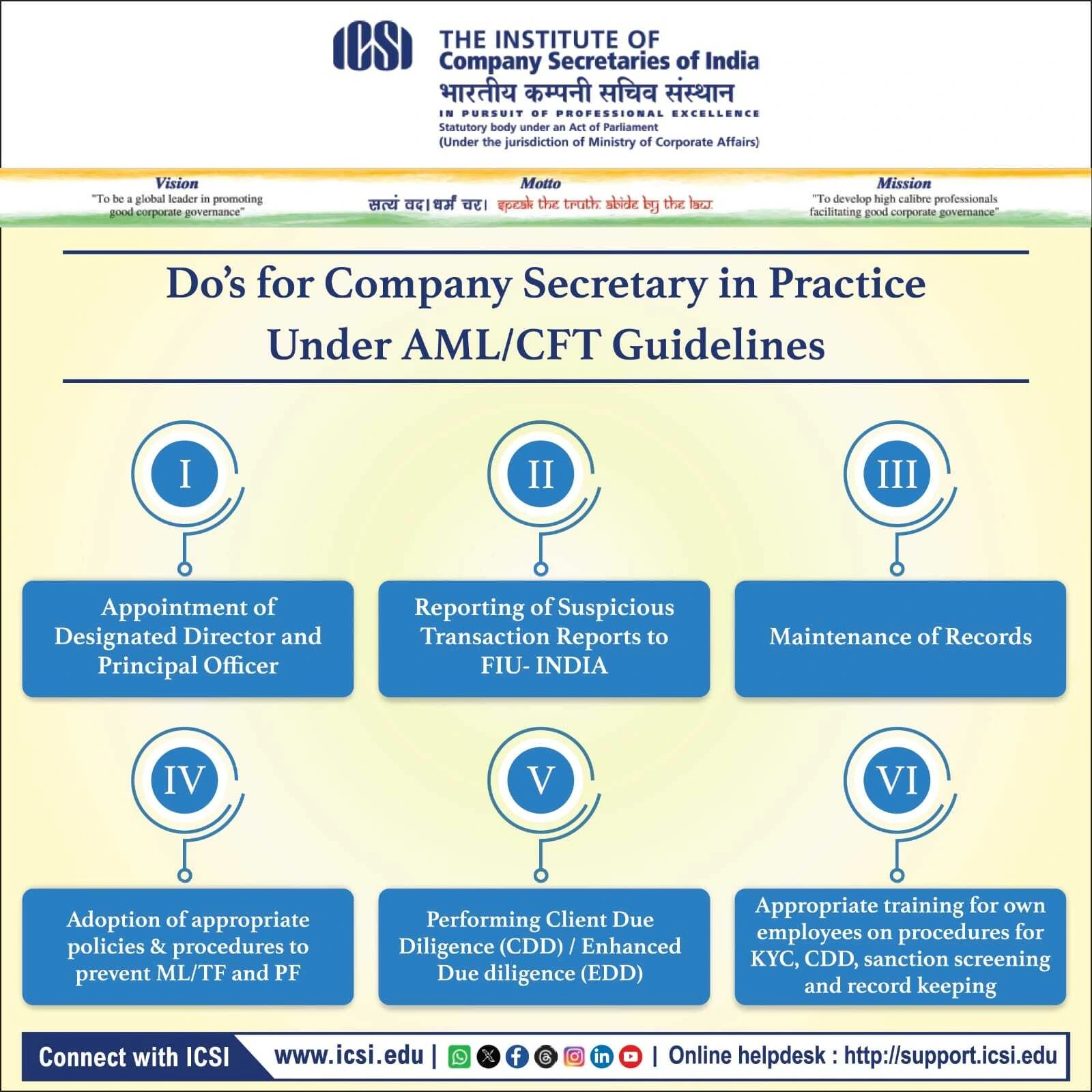
Robust KYC and AML compliance is a key expectation in professional engagements. Practicing CS are expected to verify client identity, ownership details, and legitimacy of corporate structures. This forms a foundational layer of AML obligations for Practicing CS in day-to-day assignments.
Beneficial Ownership Analysis
Understanding ultimate ownership is a critical compliance step. Complex or layered structures often require deeper scrutiny, especially in assignments where AML obligations for Practicing CS may be relevant due to regulatory exposure.
Risk-Based Assessment
A structured risk approach is essential in identifying high-risk clients or transactions. This includes evaluating cross-border structures, unusual shareholding changes, or non-transparent ownership patterns. Such assessments strengthen AML obligations for Practicing CS in practical execution.
Documentation & Record Maintenance
Proper documentation and certification support audit readiness and regulatory defensibility, including issuance of professional certificates such as format of Company Secretary certificate required for FC-GPR compliance. This includes maintaining prescribed disclosures and supporting documentation, such as formats of declarations required to be attached with FC-GPR filing.
FIU Reporting Perspective for Practicing CS
A common misconception is that all Practicing Company Secretaries automatically qualify as reporting entities under PMLA. In practice, FIU reporting obligations for PCS arise only when they perform specified activities notified under the PMLA framework.
Where such activities are undertaken, Practicing CS may be required to comply with applicable obligations relating to client due diligence, record maintenance, reporting, and registration requirements under the FIU-IND framework.
Therefore, professionals should evaluate each engagement individually to determine whether AML obligations apply.
This makes AML obligations for Practicing CS relevant even without direct reporting status.
Common Red Flags in CS Practice
Practicing CS should remain alert to:
- Unexplained ownership layering
- Frequent restructuring without rationale
- Resistance to KYC disclosure
- Complex cross-border structures
- Use of nominee/shareholding masking
Awareness of these indicators strengthens AML obligations for Practicing CS in real-world application.
Compliance Gaps in Practicing CS
Common gaps include:
- Weak onboarding checks
- Over-reliance on client declarations
- Lack of structured risk assessment
- Incomplete documentation trail
These gaps weaken AML compliance and dilute effective execution of AML obligations for Practicing CS.
Regulatory Exposure & Risk
Even if not directly regulated under FIU, Practicing CS may still face exposure through:
- Client-linked PMLA investigations
- Scrutiny of advisory or certification work
- Professional negligence concerns
Hence, PMLA compliance for CS professionals becomes a practical safeguard alongside AML obligations for Practicing CS.
Strengthening AML Framework in CS Practice
A practical framework includes:
- Client risk categorization
- Structured KYC verification
- Documentation SOPs
- Engagement-wise compliance files
- Escalation protocols
These systems help operationalize AML obligations for Practicing CS effectively in daily practice.
How Ebizfiling Helps?
As AML regulations continue to evolve, Practicing Company Secretaries need structured processes to manage engagement-level compliance obligations effectively.
Ebizfiling assists CS professionals by providing:
- Guidance on the applicability of PMLA and FIU-IND requirements.
- Support in developing AML and KYC onboarding frameworks.
- Beneficial ownership verification assistance.
- Risk-based client assessment templates and documentation checklists.
- SOPs for record maintenance and compliance documentation.
- Advisory support for cross-border transactions and complex ownership structures.
- Assistance in identifying FIU reporting triggers for specified activities.
With a practical and process-driven approach, Ebizfiling helps Practicing CS strengthen AML compliance, reduce regulatory exposure, and maintain defensible professional records.
Businesses seeking specialized compliance and financial advisory support can also explore our guide on Top 10 CA Firms in India to understand the leading players in the professional services ecosystem.
Connect with Ebizfiling’s compliance experts for practical guidance tailored to your professional engagements today.
Conclusion
The compliance environment is evolving rapidly, and Practicing Company Secretaries are increasingly expected to align with financial transparency standards. Even when not directly regulated, AML obligations for Practicing CS play a critical role in ensuring safe, defensible, and compliant professional practice.
A strong understanding of AML obligations for Practicing CS ultimately enhances credibility, reduces regulatory exposure, and strengthens professional integrity. For robust advisory support and seamless compliance execution, businesses can rely on experienced professionals like Ebizfiling. You can also explore the Top 10 CS firms in India for understanding the leading players in the compliance and advisory ecosystem.
Frequently Asked Questions
1. Are Practicing CS classified as reporting entities under FIU-IND?
Practicing Company Secretaries are not automatically classified as reporting entities solely based on their professional status. However, certain Practicing CS may fall within the reporting framework under PMLA when they undertake specified financial or corporate service activities notified by the Government. Therefore, the applicability depends on the nature and scope of services provided.
2. What AML obligations apply to Practicing CS under PMLA?
Where a Practicing Company Secretary undertakes activities covered under the notified PMLA framework, AML obligations may apply. These obligations can include conducting client due diligence, verifying beneficial ownership, maintaining records, performing risk assessments, implementing KYC procedures, and complying with applicable FIU-IND reporting requirements.
3. When can AML obligations for Practicing CS become relevant?
AML obligations for PCS become relevant during assignments involving corporate structuring, beneficial ownership analysis, or cross-border transactions. In such cases, proper KYC and risk assessment help ensure professional due diligence.
4. What is the role of FIU-IND in AML compliance?
FIU-IND collects and analyzes reports from banks and other regulated entities under PMLA. While Practicing CS are not directly covered, understanding FIU-IND framework helps maintain better compliance awareness in advisory work.
5. What kind of due diligence is expected from Practicing CS?
Practicing CS are expected to follow strong KYC, verify ownership details, and review transaction background. These steps are part of good professional practice and support AML obligations for Practicing CS in sensitive assignments.
6. How does AML obligations for Practicing CS apply in advisory work?
In advisory work, AML obligations for Practicing CS mainly relate to identifying risk patterns, verifying client information, and ensuring transparency in corporate structures, especially when dealing with complex ownership or cross-border elements.
7. How does Ebizfiling support AML compliance for CS professionals?
Ebizfiling helps Practicing CS with structured compliance support, documentation guidance, and advisory assistance. This makes AML obligations for PCS easier to manage in real practice without missing key regulatory checks.
8. Can Ebizfiling assist in documentation for FIU-IND related compliance?
Yes, Ebizfiling provides support in compliance documentation and filing-related guidance. Although Practicing CS are not directly under FIU-IND reporting, proper documentation helps meet due diligence expectations effectively.
9. What are common AML risks faced by Practicing CS?
Common risks include unclear ownership structures, resistance to KYC disclosure, and frequent restructuring without justification. Such cases increase compliance exposure and require careful review under AML obligations for Practicing CS.
10. Why is AML awareness important for Practicing CS?
AML awareness helps Practicing CS avoid compliance gaps, improve risk assessment, and strengthen advisory quality. Even without direct FIU-IND reporting duties, it supports better professional judgment in high-risk assignments.





Expert Tax Consultancy Services
Stay compliant with AML and tax laws through expert tax consultancy and professional guidance.
About Ebizfiling -



September 7, 2026 By Steffy A
GST Compliance for LLP to Private Limited Conversion: GST & ITC Transfer Introduction Converting a Limited Liability Partnership into a Private Limited Company involves important legal and structural changes. One area that requires particular attention during an LLP to Private […]
September 5, 2026 By Steffy A
LLP Partner Remuneration Disallowance & Rectification Explained Introduction LLP partner remuneration disallowance can arise when remuneration recorded in an LLP’s books does not match the amount reported in the income-tax return or the deduction permitted under the applicable tax provisions. […]
September 5, 2026 By Steffy A
Property Acquisition Tax Planning: A Complete Guide Introduction Buying a residential property requires careful financial planning because it involves significant decisions related to taxation, funding, ownership structure, and long-term financial goals. Whether an individual is purchasing a first home or […]