

-
July 19, 2022
Everything on Income Tax Slab for Women, Income Tax Benefits for Women and Income Tax Exemption
Introduction
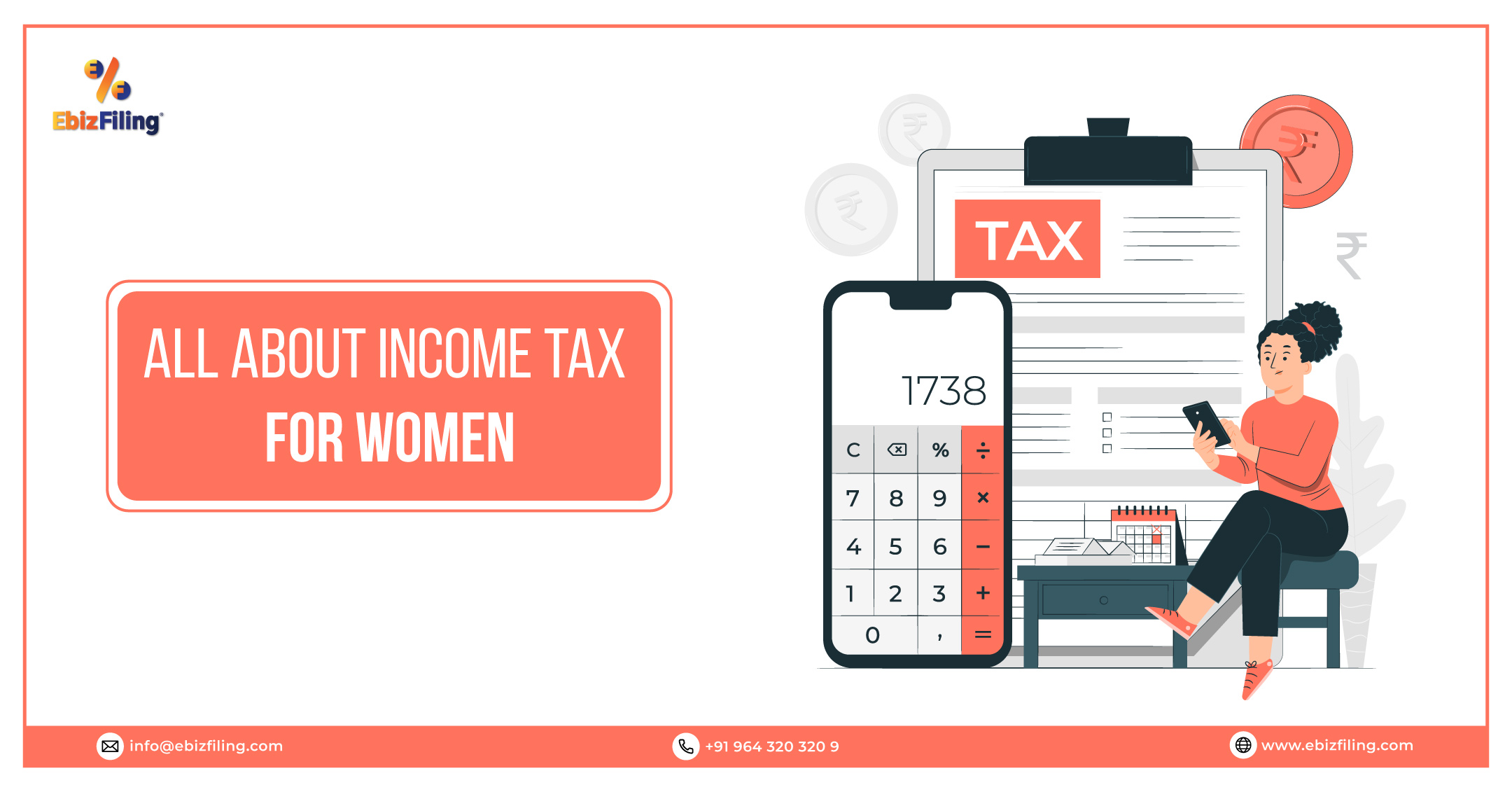
Over the years, the Indian government has taken significant steps to empower women. One of these steps has been to provide them with monetary perks and concessions. Stamp duty exemptions, property tax exemptions, home credit subsidies, and lower interest rates on home loans are just a few examples. In this article information on Income Tax Slab for Woman, Income Tax Benefits for Women and Income Tax Exemption for Women.
However, beginning in the FY (Financial Year) 2012-13, the government has abandoned this approach and replaced it with a single income tax slab for both men and women. There is no longer a separate income tax bracket for women, and there are no particular income tax exemptions for women.
Information on Income Tax Slab for Women
The applicable tax rates based on one’s income and age are referred to as Income Tax Slabs. While the technique of categorizing remains the same, the slabs are subject to change during each Union Budget. The tax rates stay the same as the previous financial year in a budget where no adjustments are officially announced.
-
Income Tax Slab rates for Woman under the Age of 60 Years
|
Income |
Income Tax Rate |
|
Up to Rs. 2,50,000 |
– |
|
Rs. 2,50,001 – Rs. 5,00,000 |
5% |
|
Rs. 5,00,001 – Rs. 10,00,000 |
20% |
|
Above Rs. 10,00,000 |
30% |
-
Income Tax Slab Rates for Women above 60 years but below 80 Years
|
Income |
Income Tax Rate |
|
Up to Rs. 3,00,000 |
– |
|
Rs. 3,00,001 – Rs. 5,00,000 |
5% |
|
Rs. 5,00,001 – Rs. 10,00,000 |
20% |
|
Above Rs. 10,00,000 |
30% |
- Income Tax Slab Rates for Women above the age of 80 Years
|
Income |
Income Tax Rate |
|
Up to Rs. 5,00,000 |
– |
|
Rs. 5,00,001 – Rs. 10,00,000 |
20% |
|
Above Rs. 10,00,000 |
30% |
Income Tax Benefits for Women
-
At the time of repaying House Loan
The Income Tax Act allows you to claim tax benefits on home loan interest payments. If the taxpayer lives in the house, deductions of up to INR 200,000 are permitted under certain circumstances. Under some circumstances, a deduction of INR 50,000 maybe available to first-time buyers.
Although women’s income in India is taxed at the same rate as men’s, knowing how to save money on taxes is crucial. When a woman understands how and where to save money on taxes, her purchasing power increases, allowing her to become more self-sufficient.
-
Deduction Under Section 80C of Income Tax Act
You can get a tax break of up to 1.5 lakh on your profits, if you have earn profit from the following:
-
- NSC (National Saving Certificate)
- Sukanya Samriddhi Yojana
- National Pension Scheme
- EPF (Employee Provident Fund)
- Senior Citizen Saving Scheme
- ELS (Equity Linked Saving Scheme)
-
Benefits in Education Loan
Tax benefits can be claimed on interest paid on a loan used to complete senior secondary education. The loan can be for the borrower, their spouse, or their children. Exemption claims can be made for up to eight years or until interest is paid. Fortunately, there is no cap on how much you can claim.
-
Sukanya Samriddhi Yojana
For a girl kid under the age of ten, a woman can open an SSY account. As a parent or legal guardian, you can deposit up to INR 150,000 and get a guaranteed 8.5 percent return until your child turns 21. The interest as well as the maturity amount are tax-free.
Income Tax Exemption for Women
-
Section 80GG of Income Tax Act
If you do not get House Rent Allowance, this exemption applies to your rent payment. The amount of this exemption is limited to the lesser of the following:
-
- Ten percent of your overall income is spent on rent.
- A quarter of your overall income
- INR 5,000
-
Section 80D under Income Tax Act
Exemption from paying health insurance premiums for oneself, one’s spouse, dependent children, parents, and so on. The following is the exemption’s upper limit:
-
- 25,000 for self, spouse, and children under the age of 18
- Up to 50,000 (self, spouse, and dependent children under the age of 60) + up to 50,000 (self, spouse, and dependent children under the age of 60) (for parents above 60 years of age)
- 25,000 (for self, spouse, and children under the age of 18) + 25,000 (for parents)
- 25,000 (for self, spouse, and children under the age of 18) Plus up to 50,000 (for parents above 60 years of age)
-
Section 80DD of the Income Tax Act
This clause allows for medical treatment exemptions for disabled or dependent family members. The exemption limitations under this provision are as follows:
-
- If the disabled person has a 40-80% physical or mental disability, you may be eligible for a INR 75,000 tax break.
- The tax exemption ceiling is established at INR 125,000 if the bodily or mental handicap is greater than 80%.
-
Section 80G under Income Tax
Contributions to charitable organizations and a few relief funds are eligible for tax exemptions. In some situations, you maybe eligible for a tax deduction of up to 50% of your donation, while contributions to other programmes are tax-free 100 percent of the time.
Conclusion
As a result of these exemptions and benefits, women can significantly lower their tax liability by making appropriate investments and expenditures. Despite the fact that these investments are often long-term, they can be quite useful when it comes to tax savings.




Income Tax Return
Filing of Income Tax return is necessary if you have earned any income. File your ITR with EbizFiling
About Ebizfiling -



Reviews
DHAIVAT ANJARIA
20 Oct 2018"Very proactive and committed. Excellent service."
Devangi Patnayak
11 Mar 2018I am very happy with the way they serve their clients. They are focused on providing the best help that they can and are result oriented.
Devang Panchal
09 Sep 2018They helped me with my company’s name change and I was quite satisfied with the way they served me. I am surely coming back to you in case of any compliance problem.
September 30, 2026 By Srishti M
September 29, 2026 By Srishti M
Income Tax Compliance Calendar October 2026: Filing Guide Introduction The Income Tax Compliance Calendar October 2026 highlights important income tax obligations applicable to taxpayers, businesses and entities covered under audit and transfer pricing provisions. October 2026 includes key compliance […]
September 18, 2026 By Srishti M
Professional Tax Registration Cancellation Process Explained Introduction Professional Tax is a state-level tax applicable to individuals and businesses engaged in professions, trades, callings, or employment, subject to the provisions prescribed under respective state laws. Businesses liable under applicable Professional Tax […]