


-
September 17, 2026
-
BySiddhi R
EPFO Wage Ceiling Increased to ₹25,000: Key Impact Explained
Introduction
The EPFO wage ceiling increased proposal has been approved by the Union Cabinet based on the recommendation of the Ministry of Labour & Employment to enhance the mandatory EPFO coverage wage ceiling from ₹15,000 to ₹25,000 per month. According to the Ministry, this enhancement is expected to bring more than 51 lakh additional employees under mandatory EPFO coverage and expand social security protection for workers.
This blog explains the revised EPFO wage ceiling, its impact on employees and employers, and how the updated limit may affect EPF, EPS, and EDLI coverage.
Key Points
- The EPFO wage ceiling has been approved for revision from ₹15,000 to ₹25,000 per month.
- The change is expected to bring more than 51 lakh additional employees under mandatory EPFO coverage.
- Employees in the ₹15,000 to ₹25,000 wage category may benefit from expanded social security coverage.
- EPF, EPS, and EDLI benefits will continue according to applicable scheme provisions.
- EPFO and the Ministry of Labour & Employment will take necessary implementation steps after the approval.
What is the EPFO Wage Ceiling?
The EPFO wage ceiling refers to the maximum monthly wage limit considered for mandatory coverage under the Employees’ Provident Fund Organisation (EPFO) framework.
Under the existing framework, employees joining employment with wages above ₹15,000 per month were not automatically covered under mandatory EPF provisions. The approved proposal seeks to increase this wage ceiling to ₹25,000 per month.
The change is intended to align the EPFO framework with increasing wages and the expansion of formal employment.
EPFO Wage Ceiling Update from ₹15,000 to ₹25,000
The Union Cabinet approved the proposal to enhance the wage ceiling for mandatory EPFO coverage from ₹15,000 to ₹25,000 per month.
| Particulars | Earlier Limit | Revised Limit |
| EPFO mandatory coverage wage ceiling | ₹15,000 per month | ₹25,000 per month |
The revision is expected to include employees earning between ₹15,000 and ₹25,000 per month within the statutory social security framework.
The Ministry of Labour & Employment has stated that this enhancement is expected to widen mandatory EPFO coverage and bring more than 51 lakh additional employees under the statutory social security framework. The detailed notification and announcement can be accessed through the Ministry of Labour & Employment press release.
Why Was the EPFO Wage Ceiling Increased?
The EPFO wage ceiling increased decision aims to expand social security coverage in line with changing wage levels and formal employment growth.
According to the Ministry of Labour & Employment release, the wage ceiling had remained unchanged after the previous revision in September 2014. The current revision aims to reflect rising incomes and broader workforce participation.
The increase may help extend access to:
- Provident Fund savings
- Pension benefits under Employees’ Pension Scheme (EPS)
- Insurance protection under Employees’ Deposit Linked Insurance Scheme (EDLI)
These benefits will apply according to the applicable scheme provisions.
Who Will Be Affected by the EPFO Wage Ceiling Revision?
The EPFO wage ceiling increased to 25000 update mainly affects employees who were outside mandatory EPFO coverage because their wages exceeded the earlier ₹15,000 limit.
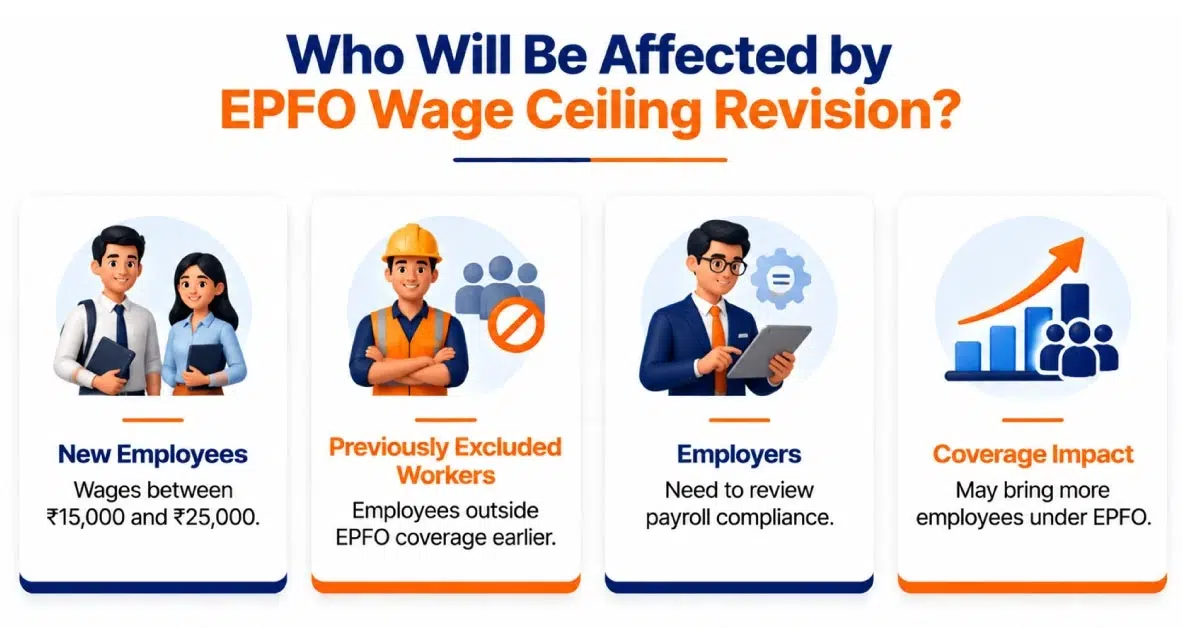
The revision is expected to cover:
- Employees joining employment with wages between ₹15,000 and ₹25,000 per month.
- Workers who were previously outside mandatory EPFO coverage due to the earlier wage ceiling.
- Employers who may need to review payroll and compliance processes after implementation.
The decision is expected to bring more than 51 lakh additional employees under mandatory EPFO coverage.
Impact of New EPFO Wage Ceiling on Employers
The EPFO wage limit revised to ₹25,000 may require employers to review employee eligibility and payroll processes after the implementation framework is notified.
Employers may need to consider:
- Reviewing employees falling within the revised wage range.
- Updating payroll records based on applicable EPFO requirements.
- Ensuring accurate PF-related compliance after implementation.
- Understanding changes notified by EPFO authorities.
The exact compliance process will depend on statutory and administrative steps issued by the concerned authorities.
Employers should review their employee onboarding and payroll processes after the revised EPFO wage ceiling becomes applicable. Proper payroll setup for employees helps businesses maintain accurate employee records and manage statutory compliance requirements efficiently.
Impact on Employees After EPFO Salary Limit Increase
The EPFO salary limit 25000 revision may expand access to statutory social security benefits for eligible employees.
Employees covered under the revised framework may receive benefits including:
- Long-term provident fund savings.
- Pension-related benefits under EPS.
- Insurance protection linked with EPF membership under EDLI.
The Ministry stated that the decision aims to strengthen social security protection for a wider segment of workers.
EPF, EPS and EDLI Benefits Under EPFO Coverage
The increase in the Employee Provident Fund wage ceiling may expand access to various social security benefits.
Employees’ Provident Fund (EPF)
EPF helps employees build retirement savings through contributions made during employment. The scheme provides long-term financial support after retirement or during eligible circumstances.
Employees’ Pension Scheme (EPS)
EPS provides pension-related benefits to eligible EPFO members according to applicable scheme provisions.
Employees should understand how different EPFO schemes work, including the distinction between retirement savings and pension benefits. Learn more about the difference between EPF and EPS to better understand their respective benefits and features.
Employees’ Deposit Linked Insurance Scheme (EDLI)
EDLI provides insurance protection linked with EPF membership. The approved revision may extend access to these benefits to additional employees who become covered under the framework.
Employers should understand the difference between various employee welfare schemes and their compliance requirements. Read our detailed guide on PF vs ESIC to understand the key differences, eligibility criteria, and benefits under both schemes.
What Should Employers Do After the EPFO Wage Ceiling Update?
Employers should monitor official notifications and implementation guidelines issued by EPFO and the Ministry of Labour & Employment.
Businesses should:
- Review employee wage records.
- Identify employees who may fall under the revised coverage limit.
- Update internal payroll processes when applicable.
- Maintain proper EPF compliance records.
Employers should also understand the applicable PF and ESIC compliance requirements to ensure proper employee coverage, statutory compliance, and timely fulfilment of payroll obligations.
Manage EPFO Compliance Requirements With Ebizfiling
Changes in EPFO regulations may require businesses to review their employee records, payroll processes, and statutory compliance requirements. Ebizfiling can assist businesses in understanding and managing applicable compliance requirements related to employee-related obligations.
Ebizfiling can help with:
- Guidance on PF and employee compliance requirements applicable to businesses.
- Assistance in understanding statutory compliance obligations related to employees.
- Support with maintaining compliance-related documentation and records.
- Assistance with other business compliance requirements, including labour and regulatory matters.
Businesses that need assistance with employee provident fund compliance can get expert support through our EPF Registration Services to ensure proper registration, documentation, and compliance with applicable EPFO requirements.
Conclusion
The EPFO wage ceiling increased proposal from ₹15,000 to ₹25,000 marks a significant change in the mandatory EPFO coverage framework. The revision is expected to extend social security benefits to more employees and align the framework with changing wage levels.
Employers should track further EPFO notifications for implementation details and compliance requirements.
Frequently Asked Questions
1. What does the increase in EPFO wage ceiling from ₹15,000 to ₹25,000 mean for employees?
The revision in the EPFO wage ceiling increased framework means that employees earning between ₹15,000 and ₹25,000 per month may come under mandatory EPFO coverage after the applicable implementation process. Eligible employees may get access to EPF, EPS, and EDLI benefits as per the provisions of the respective schemes.
2. Will employees earning more than ₹25,000 be covered under mandatory EPFO provisions after the wage ceiling revision?
The increase in the EPFO wage ceiling to ₹25,000 only changes the wage limit considered for mandatory coverage. Employees earning above the revised ceiling will continue to be governed by existing EPFO provisions, including applicable membership and coverage rules. The final applicability will depend on implementation guidelines issued by EPFO.
3. How will the revised EPFO wage ceiling affect employer PF compliance requirements?
The revised EPFO wage ceiling may require employers to review employee wage records and identify employees who fall within the updated coverage limit. Employers may need to update payroll records, employee classifications, and PF compliance processes after the revised framework becomes applicable.
4. Does the EPFO wage ceiling revision change the PF contribution calculation?
No direct change in PF contribution calculation can be determined only from the wage ceiling revision. The change primarily relates to mandatory coverage eligibility. Any modification regarding contribution rates, pensionable wages, or calculation methods will depend on applicable EPFO rules and official implementation instructions.
5. Which category of employees may benefit from the revised EPFO wage ceiling?
Employees joining employment with wages between ₹15,000 and ₹25,000 per month may benefit from the revised EPFO salary limit 25000 framework. These employees were earlier outside mandatory EPFO coverage because their wages exceeded the previous wage ceiling.
6. Will existing EPF members be required to make any changes after the wage ceiling revision?
Existing EPF members who are already covered under EPFO will continue to receive benefits according to applicable EPF, EPS, and EDLI scheme provisions. The revision mainly focuses on expanding mandatory coverage for employees who were previously outside the EPFO framework due to the wage ceiling limit.
7. What EPF, EPS, and EDLI benefits may become available to newly covered employees?
Employees who become eligible under the revised PF coverage limit may receive benefits available under EPF, EPS, and EDLI schemes. These include retirement savings through EPF, pension-related benefits under EPS, and insurance protection under EDLI, subject to applicable scheme conditions.
8. What should employers review before implementing the revised Employee Provident Fund wage ceiling?
Employers should review employee wage records, payroll classifications, and existing PF compliance processes. They should also monitor EPFO notifications and implementation guidelines to understand the operational requirements after the revised Employee Provident Fund wage ceiling becomes applicable.
9. How can Ebizfiling help businesses with EPFO wage ceiling compliance updates?
Ebizfiling can assist businesses in understanding Employer PF compliance requirements arising from regulatory updates. Support may include guidance on employee records, compliance documentation, and reviewing statutory obligations applicable to businesses.
10. Can Ebizfiling assist with payroll compliance after the EPFO wage ceiling revision?
Yes, Ebizfiling can assist businesses with understanding payroll compliance requirements arising from regulatory updates such as the EPFO wage ceiling increased announcement. Businesses can seek professional guidance for reviewing compliance processes and maintaining required documentation.





Get Expert Support for EPF Registration
Navigate EPF Registration smoothly and stay prepared to meet applicable provident fund requirements following the EPFO wage ceiling increase.
About Ebizfiling -



September 17, 2026 By Riyansh S
Defective Return Notice: Resolve Schedule BS & PL Errors Introduction Receiving a Defective Return Notice from the Income Tax Department means that the filed Income Tax Return (ITR) contains incomplete, inconsistent, or incorrect information that requires correction. Such notices are […]
September 17, 2026 By Srishti M
Property Sale Tax Planning in India 2026: LTCG & Key Rules Introduction Selling a property is not only about negotiating the right price. The date of transfer, holding period, stamp-duty value, residential status, reinvestment strategy and TDS can materially change […]
September 17, 2026 By Srishti M
Udyam Registration Annual Filing: Is Yearly Update Mandatory for MSMEs? Introduction Many Micro, Small and Medium Enterprises (MSMEs) are confused about whether they need to complete an Udyam Registration Annual Filing every year or renew their Udyam Registration after the […]