


-
July 28, 2026
-
BySteffy A
Dissolution of a Sole Proprietorship Firm in India
Introduction
Dissolution of a Sole Proprietorship Firm refers to closing the business by stopping its operations and canceling all related registrations. Since a proprietorship has no separate legal identity, the owner must handle the closure personally. This includes GST cancellation, tax compliance, closing the bank account, and canceling local licenses to complete the closure of proprietorship firm properly.
Reasons for Dissolution of a Sole Proprietorship Firm
Legal closure of business in India is an essential step to be taken to avoid future complications and legal arbitration. Proper Dissolution of a Sole Proprietorship Firm also helps complete the closure of a proprietorship firm in a legally safe manner.
Some common reasons for the closure of a sole proprietorship business can be:
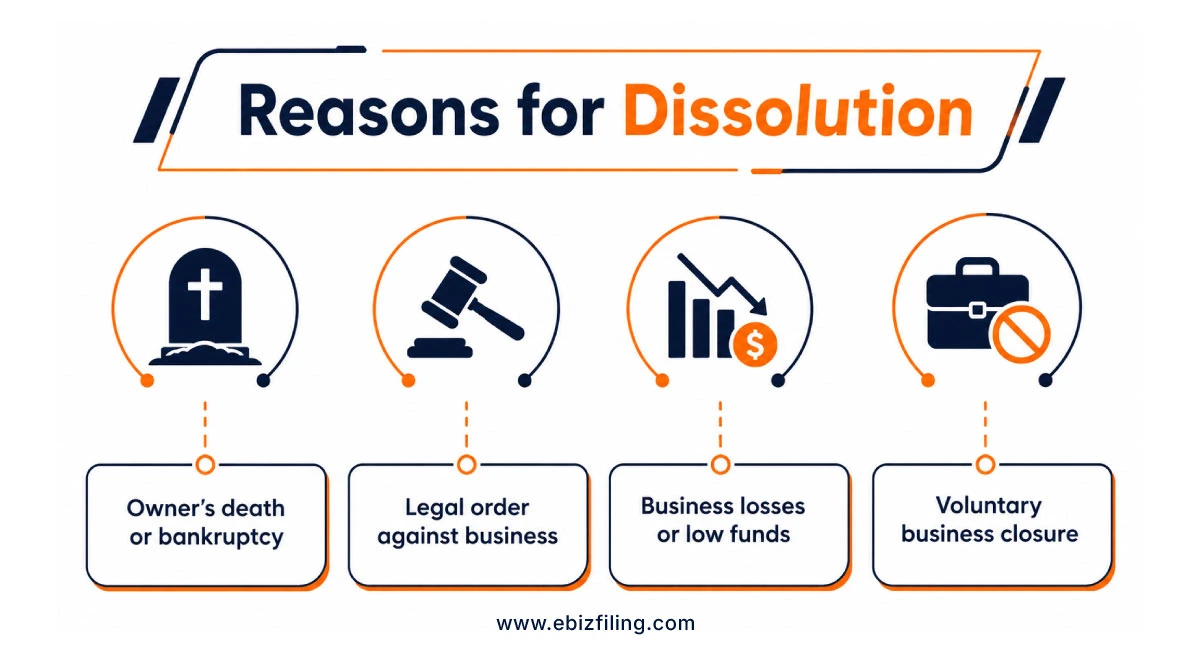
1. Bankruptcy/Death of the Sole Proprietor: Business can come to an end on bankruptcy or death of the sole proprietor where it cannot be transferred to any other person or the business could not pay off its existing debts.
2. Legal orders issued against business: Business shall have to be closed on receipt of legal orders from legal authorities if they are of the view that business is illegal or unethical.
3. Failures or limited resources: For a sole proprietor, there is always a limited source for investment and finance. Holding business single-handedly, a proprietor has to manage his business with only a few sources he holds; failures in business due to limited resources can also lead to the closure of sole proprietorship.
4. Voluntary dissolution: With challenges faced by a sole proprietor, he may opt to close down his business permanently or on the advisory of a legal expert stating for no future prospects the business to grow.
Legal Implications of Dissolution of a Sole Proprietorship Firm
Ending your sole proprietorship comes with legal aspects that need attention. You must revoke all government-issued permits, licenses, and names. Not doing this can lead to fines and other punishments.
For example, at Ebizfiling, we often come across proprietors who stop business operations but forget to cancel GST registration or local licenses. This may later result in compliance notices, late fees, or renewal liabilities.
Plus, you have to clear all debts before wrapping up. This includes taxes and what you owe employees. Since as a sole proprietor, you’re responsible, addressing these promptly is key. It reduces the risk of facing legal repercussions later.
Closing a sole proprietorship generally involves cancelling all applicable registrations, licences, and tax accounts associated with the business.
Understanding the tax effects of shutting your doors is also crucial. Your business’s ending impacts your personal taxes. You might need to submit final business and personal tax forms. And, report financial gains or losses from asset sales.
By knowing and managing the legal and financial aspects of closure properly, you can execute a compliant and smooth shutdown.
How to Properly Close a Sole Proprietorship Firm
1. Cancel GST Registration
To avoid compliance filing, additional fees, or fines, it is advised to cancel the GST registration before terminating the proprietorship firm if it is registered.
2. Surrender Trade License
If the business owner is preparing for the closure of a proprietorship firm, it is usually advised to file a request for cancellation of the trade license with the concerned municipal corporation.
3. Cancel Other Licenses
Before closing the firm, the proprietor should cancel any other business licenses registered in the firm’s name to avoid renewals, consequences, and return filing requirements.
4. Cancel Shop and Establishment Registration
You must cancel the shop and establishment registration before dissolving the proprietorship business to prevent renewal costs and non-compliance.
5. Surrender TAN Number
The proprietor must submit a TAN cancellation application to the jurisdictional AO, if a TAN number was allotted.
6. Terminate Agreements
Any agreements with parties or suppliers should be dissolved to avoid unfavorable consequences and financial liabilities.
7. Close Bank Account
You must close the current bank account for your business and provide the bank with unused credit card, debit card, and chequebook to prevent fraud.
8. Surrender Trademark
If the trademark holder is ready to relinquish their rights, they can send a withdrawal letter to the relevant Trademarks Registry.
9. Inform Stakeholders
You must call, text, or email your stakeholders to inform them that your sole proprietorship business is closing.
Complete Your Proprietorship Closure with Ebizfiling
- We review your GST, TAN, trade license, shop license, and other active registrations before closure.
- Our team helps cancel or surrender the required registrations to avoid renewal charges and penalties.
- Your business bank account closure is guided properly to reduce future financial risks.
- Tax and compliance formalities are checked before completing the dissolution of a sole proprietorship firm.
- Your closure of the proprietorship firm becomes more organized, compliant, and legally safer.
Conclusion
Dissolution of a Sole Proprietorship Firm should be done carefully by checking and clearing dues, canceling registrations, and completing tax formalities. Since the owner is personally liable for the business, proper closing of the firm will help to avoid future notices, penalties, or legal issues. With the right guidance, the closure of a proprietorship firm can be completed in a simple and compliant way. For registered companies, Ebizfiling also provides complete guidance on how to close company in India.
FAQs
1. How to inform the concerned authorities about closing my sole proprietorship?
You can inform the concerned authorities by applying for the cancellation of active registrations, licenses, and tax accounts linked to the business. For proper Dissolution of a Sole Proprietorship Firm, the owner should cancel GST, trade license, shop license, TAN, and other approvals, if applicable. This helps complete the closure of a proprietorship firm in a legal and compliant way.
2. What financial obligations should be cleared before closing a sole proprietorship?
Before completing the Dissolution of a Sole Proprietorship Firm, clear all taxes, business debts, supplier dues, and final employee payments. Ebizfiling can help check these requirements so the closure is smooth and legally safer.
3. Is there a specific timeline to close a sole proprietorship in India?
A sole proprietorship’s timeline is not fixed. There can be many reasons, like the owner could get disinterested, go ill, retire, or pass away unless the owner makes plans for it to carry on or lists it for sale; the company will cease to exist. Owners are accountable for losses.
4. What documents are required for the closure of a proprietorship firm in India?
For the closure of proprietorship firm, common documents include the proprietor’s PAN card, GST cancellation details if applicable, bank account closure request, and documents related to local license or registration cancellation. The exact documents may vary based on the registrations held by the business.
5. Do I need to file income tax returns after closing my sole proprietorship?
you may still need to file your income tax return for the financial year in which the business was active. During the Dissolution of a Sole Proprietorship Firm, it is also important to surrender the TAN number, if applicable. This helps keep your tax records clear after closure.
6. How does Ebizfiling reduce future risks during proprietorship closure?
Ebizfiling checks active GST registration, TAN, trade license, shop license, and other business registrations before closure. This helps the proprietor avoid missed cancellations, renewal charges, compliance notices, and penalties after the Dissolution of a Sole Proprietorship Firm.
7. Is a Dissolution Deed required for closing a sole proprietorship?
There is no formal “Dissolution Deed” required for the Dissolution of a Sole Proprietorship Firm. Since a sole proprietorship has no separate legal identity, the closure process mainly involves canceling registrations, clearing dues, and completing compliance formalities related to the business.
8. Is GST cancellation mandatory while closing a proprietorship firm?
Yes, if your proprietorship firm is registered under GST, you should cancel the GST registration before closing the business. This helps complete the closure of the proprietorship firm properly and avoids future return filing notices, late fees, or compliance issues.
9. What is the process to cancel registrations and licenses for my sole proprietorship?
To cancel registrations and licenses during the Dissolution of a Sole Proprietorship Firm, the owner should first clear all statutory dues, taxes, and business debts. After that, cancellation requests must be filed for GST, shop and establishment license, trade license, and other registrations linked to the business. This helps complete the closure of the proprietorship firm properly and avoids future misuse, notices, or penalties.
10. What liabilities need to be cleared before closing my sole proprietorship?
Before closing your sole proprietorship, you must clear business debts, taxes, supplier payments, employee dues, rent, utility bills, and any pending contractual liabilities. Since a sole proprietorship does not have limited liability protection, the owner is personally responsible for these dues. Ebizfiling helps you review these obligations so the closure can be completed more safely and without future legal trouble.





Dissolution of Firm
Dissolve your Firm and stop complying with routine compliances. Prices start at INR 1999/- only.
About Ebizfiling -



Reviews
alangarikka pvt ltd
23 Apr 2022Great job and thanks for filing annual compliance on time for our company.
Dhairya Lalan
23 Apr 2022Amazing team. They had a word with me post working hours and solved all my queries related to tax consultancy. I highly recommend the services.
Joel D’souza
18 Apr 2018My Company Annual Filling is very well looked after them and I am extremely satisfied and would definitely recommend them for the same.
May 13, 2026 By Ishita Ramani
August 24, 2026 By Ishita Ramani
Everything You Should Know About MSME Registration Certificate The Micro, Small, and Medium Enterprises (MSME) sector is a vital pillar of the Indian economy. It fosters innovation, generates employment opportunities, and acts as a critical supplier for larger industries. Recognizing […]
February 22, 2024 By Dharmik Joshi
How is GIFT City Transforming India? Introduction GIFT City, formally referred to as Gujarat International Finance Tec-City, is a visionary project that aims to revolutionize India’s monetary landscape and make contributions to its worldwide management. Located in Gujarat, this smart […]